Imagine waking up to birdsong, sipping coffee under pecan trees, and spending your afternoon by a clear Hill Country river. If that sounds like your pace, San Saba County may fit you well. You get small-town ease, room to spread out, and real water access for fishing, paddling, and wading. In this guide, you’ll learn what life by the water looks like here, the types of properties you’ll find, and the key checks to do before you buy. Let’s dive in.
Where Hill Country meets the water
San Saba County sits on the northern edge of the Hill Country, centered on the town of San Saba along the TX-16 and US-190 corridor. The landscape mixes river corridors, pecan orchards, ranch land, and a walkable historic downtown core. You’ll find a rural pace of life with easy access to outdoor recreation and local farms, plus the services and events you’d expect from a county seat. For an overview of county services, explore the San Saba County website.
The 2020 U.S. Census counted 5,730 residents, reflecting a low-density, mostly rural county. You can review the latest estimates on Census QuickFacts when you are comparing locations.
Rivers and year-round recreation
San Saba River basics
The San Saba River moves at a slow-to-moderate pace with shady banks, deep pools, and clear stretches. Locals enjoy fishing, wading, and small-boat paddling where conditions allow. Public access is concentrated near town parks and designated spots, while many riverfront areas are private. If you plan to paddle or fish new sections, confirm public access points and local rules. Regional reports note good paddling and fishing options across nearby waterways, including the San Saba (overview of area rivers).
Colorado Bend State Park highlights
Colorado Bend State Park defines the county’s outdoor identity with 5,300-plus acres along the Colorado River, including paddling and fishing access, cave tours, and the 70-foot spring-fed Gorman Falls. Spicewood Springs offers swim and wade areas that feel like hidden pools under limestone bluffs. The park can reach capacity on busy weekends, so check hours, closures, and make reservations when needed on the Colorado Bend State Park page.
In-town parks and trails
Right in San Saba, you can stretch your legs at the San Saba River Nature Park, an LCRA-owned greenbelt with paved paths, river overlooks, and native habitat. Mill Pond Park and Risien Park add picnic spots, play areas, and easy access to the water. These parks make it simple to fit in a daily walk or a quick evening fishing session without leaving town.
Seasonal notes to plan your day
Flows can drop in drought and rise quickly after heavy rain. That means some low-water crossings or park roads may close at times, and certain paddling stretches can become too shallow or too swift. Before a big outing, check park alerts and conditions on the state park site.
Local flavor: pecans, wine, and weekends
San Saba embraces its heritage as the “Pecan Capital,” a title tied to local horticulturist E. E. Risien and generations of growers. Pecan orchards shape riverbanks and country roads all over the county, and they remain a visible part of local life and the economy. For a deeper look at the county’s history and agricultural roots, browse the Handbook of Texas entry.
Downtown, you can sample local wine and small-town hospitality at the Wedding Oak Winery tasting room. Across the county you’ll also find small producers and easy day trips into the larger Hill Country wine corridor. To plan events, farmers market weekends, and seasonal festivals, check the official visitor site at Visit San Saba.
Homes and land by the water
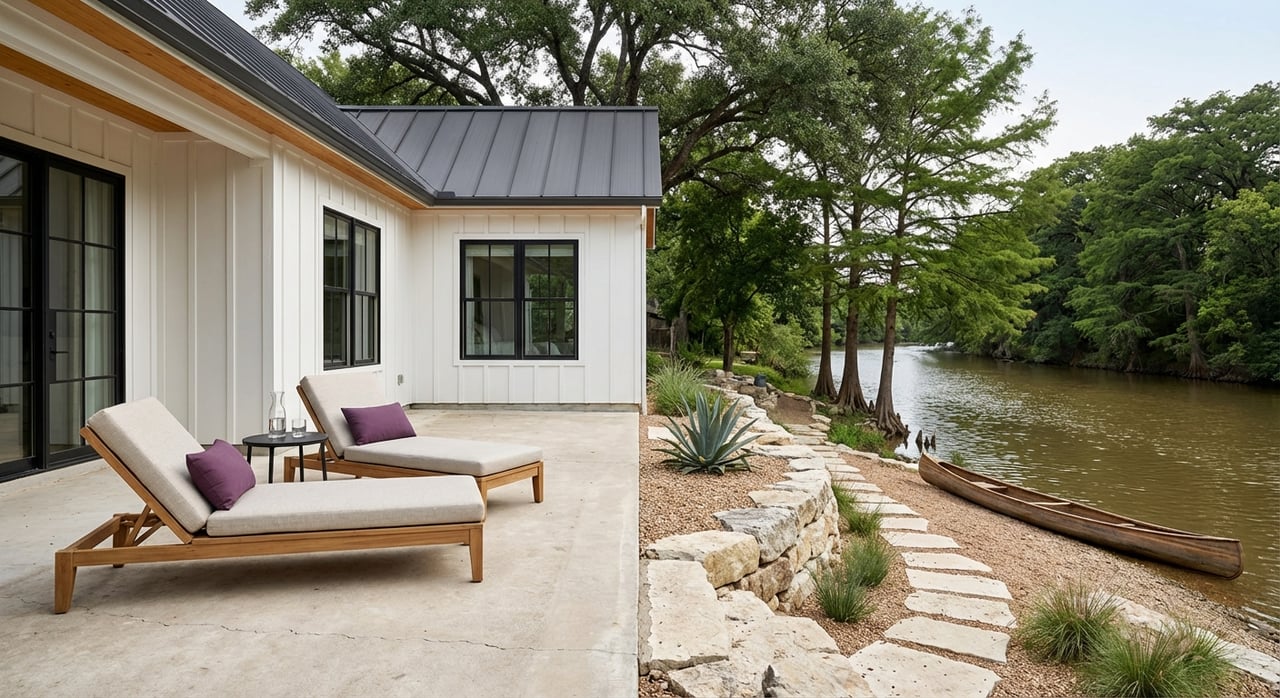
San Saba County offers a wide range of property types. In town, you’ll see single-family homes on tree-lined streets and some historic properties near downtown. Along the rivers and creeks, you can find riverfront cottages and weekend places in select pockets. Outside town, rural acreage is common, from small ranchettes to large working ranches, plus pecan orchards and occasional specialty parcels.
Prices vary widely by location, acreage, and water access. Public online snapshots often show in-town homes and small acreage properties in the lower-to-mid hundreds of thousands, with larger ranches or specialty agricultural properties at higher, sometimes multi-million, price points. Since numbers change weekly and vendor estimates differ, use current MLS data and verify the date and source before you compare.
What to know about water-adjacent land
If you are considering riverfront or lowland acreage, a little homework goes a long way:
- Confirm FEMA flood zone status and ask for any historical high-water information. You can review regional river history through USGS river gage records.
- Verify access. Clarify riparian access, any shared or deeded easements, and the condition of riverbank areas.
- Check water and wastewater. Many rural parcels have wells and septic. Inquire about well depth, yield, water quality, and any service ties to municipal systems.
- Ask about road access and closures. Some county roads and park entrances can flood after heavy rain, and dry spells can affect nearby wells and irrigation.
Practical steps for buyers and sellers
A focused checklist helps you move confidently:
- Property taxes. Look up parcel details, taxable values, and taxing entities at the San Saba Central Appraisal District. Ask for the current year’s estimate and exemptions.
- Zoning and permits. Most of the county is rural and largely unzoned. Inside city limits, different rules apply. Verify building, septic, and driveway permits with the county or city via the San Saba County site.
- Parks and access. If your lifestyle plan includes hiking, swimming, or paddling, review trail and river conditions and any reservation requirements on the Colorado Bend State Park page.
- Schools and services. San Saba ISD operates local campuses. For current enrollment and accountability information, review official profiles like the San Saba High School overview and contact the district directly for details.
- Internet and utilities. In rural areas, service can vary by road and even by side of the property. Expect a mix of local co-op and fiber where available, DSL or cable in some pockets, and fixed wireless or satellite as a fallback. Always run an address-level availability check before you rely on a specific speed tier.
Living here day to day
You can reach Austin in roughly 1.5 to 2 hours depending on your exact address and route, which makes San Saba County a realistic weekend escape and a manageable full-time base for many who travel occasionally. The lifestyle balances quiet mornings and easy evenings with quick access to parks, wineries, and river spots.
You might be a fit if you want:
- A small-town home close to parks and services.
- A riverfront weekend place with room for guests.
- A recreational ranch for hiking, fishing, and wildlife viewing.
- An agricultural parcel or orchard with a long-term plan.
When you are ready to explore listings, set up tours, or map out due diligence, reach out to Melissa Gibbard for local guidance and a smooth process from search to close.
FAQs
What does “Hill Country by the water” mean in San Saba County?
- It means daily access to rivers, springs, and trails, including Colorado Bend State Park’s Colorado River frontage and in-town greenbelts along the San Saba River.
Where can you swim or paddle in San Saba County?
- Public access is available at managed areas like Spicewood Springs and designated park zones at Colorado Bend State Park; confirm park rules, reservations, and any closures before you go.
Are there wineries in San Saba?
- Yes, you can visit the Wedding Oak Winery tasting room downtown; check hours and reservation policies in advance.
How much do homes and land cost in San Saba County?
- Ranges vary widely; in-town homes and small ranches often fall in the lower-to-mid hundreds of thousands while larger ranches or specialty agricultural properties can be higher, so use current MLS data and note the date and vendor for any estimates.
What should I check before buying a riverfront property?
- Review FEMA flood maps, look up USGS river gage history, verify any access easements, and confirm well and septic details plus county permitting requirements.
What schools serve San Saba residents?
- San Saba ISD operates local campuses; you can review neutral data and contact information on profiles such as the San Saba High School overview and then call the district for the latest details.