Buying horse property in Erath County can be exciting, but it also comes with a few more moving parts than a typical home purchase. You are not just buying a house and some land. You are buying access, water, usable acreage, and a setup that needs to work safely for both you and your horses. If you want to avoid costly surprises and shop with confidence, this guide will walk you through what matters most before you close. Let’s dive in.
Start With County Rules
One of the first things to know about Erath County is that horse-friendly land is not automatically the same as fully ready-to-use horse property. The county does not require a county zoning permit or certificate of occupancy, but that does not mean there are no rules.
Subdivision and platting rules still apply, along with septic system requirements and construction rules in FEMA flood zones. If a property is inside Stephenville city limits, the city planning and zoning system applies. In some areas, city ETJs may also affect plats and subdivisions, so location matters.
Check Water Early
Water deserves its own due diligence category when you are buying acreage in Erath County. The county directs water questions to the Middle Trinity Groundwater Conservation District, which serves Erath County and handles well registration and permitting.
If the property uses a private well, you should confirm its status and condition before closing. Texas private well owners are responsible for regular water testing, and Texas A&M AgriLife recommends keeping records for each well and testing at least once a year. That makes well history, water quality, and maintenance records important parts of your review.
Ask About Old Wells
Older rural tracts sometimes have wells that are no longer in use. Those abandoned wells need attention because they can create groundwater risks.
Texas A&M AgriLife advises landowners to coordinate with the local groundwater district and a licensed well contractor on unplugged wells. If you are touring older acreage, this is one of those details worth asking about right away.
Focus on Usable Acreage
A common mistake when buying horse property is focusing too much on the total acre count. In reality, usable acreage matters more than gross acreage.
Soil type, seasonal wet areas, shallow bedrock, drainage, and septic limitations can all affect how much of the land will truly work for turnout, pasture, a barn pad, or an arena. NRCS soil surveys can help flag these issues, which is especially useful in Erath County when you are deciding how the land could function day to day.
Pasture Management Matters
Texas A&M AgriLife notes that stocking rate is the most important grazing decision. Overgrazing can quickly remove desirable plants, increase runoff, and lead to erosion.
That means a property that looks pretty at first glance may still need a closer look at forage condition, weed pressure, and how the pasture is being used. Since forage is the foundation of the equine diet, pasture quality should be part of your buying decision, not something left for later.
Think About Layout, Not Just Land Size
Even a property with enough acreage can be frustrating if the layout does not work well. A practical horse-property setup usually keeps paddocks or pasture space close to the barn, feed storage, and work areas instead of spreading everything too far apart.
Gate placement also matters. Gates should support equipment access and avoid low spots where mud and water can collect. A smart layout often includes a sacrifice paddock or dry lot so wet-weather turnout does not ruin the main pasture.
Plan for a Dry Lot
A sacrifice paddock gives you a place to manage turnout during wet conditions or heavy use. Extension guidance suggests about 400 square feet per horse for that space.
That can make a big difference in protecting the rest of your pasture. When you tour property, it helps to think about where that protected area could go and whether the land already supports rotation.
Evaluate Barns for Function
A barn can look charming and still be a poor fit for horses. It helps to evaluate horse facilities based on function first and finish second.
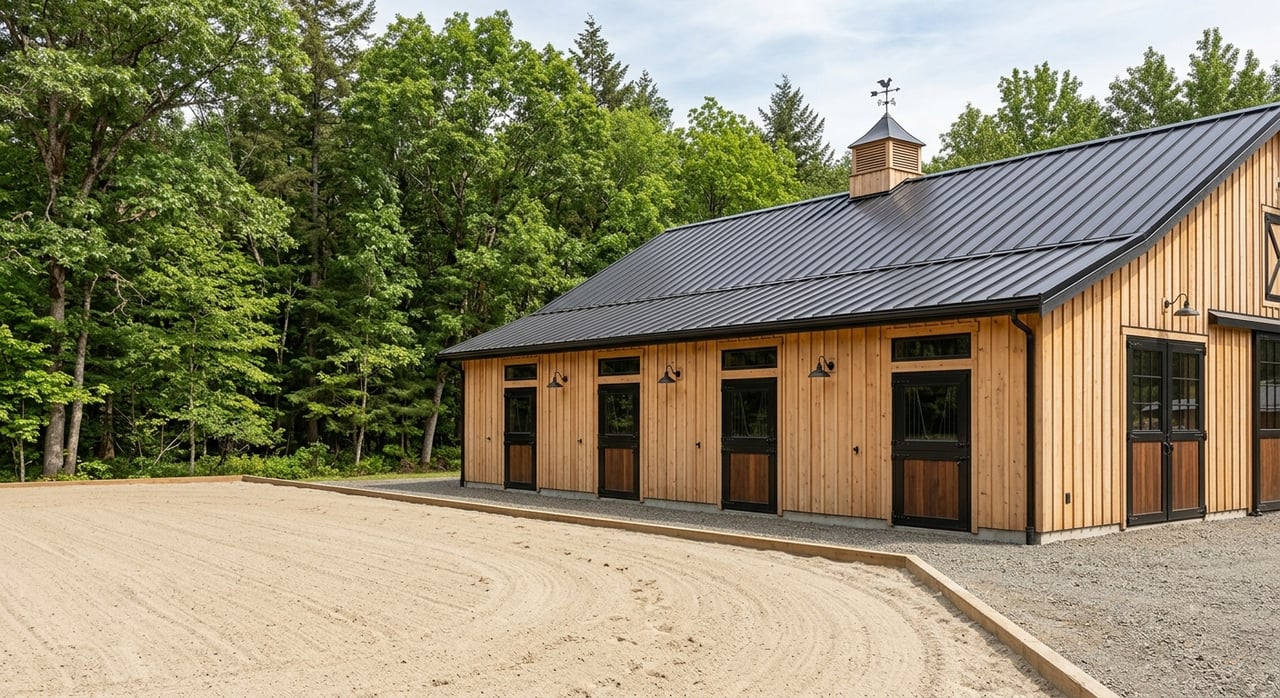
Standard guidance for a 1,000-pound horse is a 12-by-12-foot stall, with 8-foot stall partitions commonly used. Barn ceilings are often 10 to 12 feet high, with 8 feet as a minimum. Ventilation is also critical, and inadequate ventilation is one of the most common mistakes in horse facilities.
Look at Drainage and Storage
Barn site planning should include more than the stall count. Surface water should drain away from the stable site, and the building should allow for fresh air rather than overly tight construction.
It is also wise to look at hay and bedding storage. Guidance recommends avoiding storage over stalls when possible because of both fire and air-quality concerns.
Run-In Sheds Can Work Too
Not every horse property needs a full traditional barn setup. If the property is designed mainly for turnout, a run-in or open-front shed may be enough for some horses.
A 12-by-20-foot run-in shed, or 240 square feet, is considered ideal for two horses. If you prefer a simpler setup, this can be a useful benchmark when comparing properties.
Inspect Arenas Below the Surface
If a property includes an arena, do not stop at the footing you can see on top. The base and sub-base matter just as much as the surface material.
There is no single perfect footing for every arena, and topsoil is not recommended. Many arenas also need periodic topping off or more significant renewal over time, so buyers should ask about drainage, base condition, and maintenance history before relying on the current appearance.
Review Fencing and Access Together
Horse fencing should be safe, visible, and durable. Common materials include rail, plank, PVC, wire, electric, or a combination of systems, but the key is that the fencing should avoid sharp edges and entrapment hazards.
A minimum 5-foot perimeter height is commonly recommended for horse fencing. Gates should also be sturdy and wide enough for equipment, often in the 14- to 16-foot range.
Think Beyond the Perimeter
Good horse-property design is about more than enclosing the boundary. Interior lanes, gate placement, and movement between work areas all affect how practical the property will be.
Farm equipment often needs 12- to 16-foot-wide lanes. It also helps to have a safe permanent perimeter fence and a separate sacrifice area for bad weather or heavy use.
Confirm Legal Access
Access should be verified before closing, not assumed. In Erath County, a new or changed 9-1-1 address is handled through the appraisal district.
If access crosses another property, you need the granted easement with the survey. If access comes from a state highway or FM road, a TxDOT driveway permit is required.
Understand Ag Appraisal for Horses
Many buyers ask whether horse property in Erath County can qualify for agricultural appraisal. The answer depends on the actual use of the land, not simply the fact that horses are present.
Texas allows qualifying agricultural land to be appraised based on productivity value rather than market value, and Erath CAD has current guidelines that specifically address horse operations. In Erath CAD, a mature horse equals 1.25 animal units, and a typical horse breeding operation requires at least two breeding-age mares.
Do Not Assume a Tax Break
A horse kept as a family pet does not qualify the property for this tax treatment. If the land use changes, rollback tax can also apply.
Because of that, it is smart to ask Erath CAD about the property’s current status and whether the existing or planned use could qualify before you build your budget around tax savings.
Build a Smart Closing Checklist
Horse-property purchases usually need a broader inspection process than a standard residential sale. In Erath County, the county does not perform residential construction or remodeling inspections, so you should not assume local review will uncover property issues for you.
Instead, plan for a general home inspector plus land-specific specialists as needed. Before closing, buyers should confirm the survey, title, septic status, floodplain conditions, well details, and access records.
Key Items to Verify
- Usable grazing acreage, soil limitations, and drainage
- Well status, water testing, and any abandoned wells
- Barn stall size, ventilation, drainage, and storage safety
- Fence visibility, fence height, and gate width
- Septic records and permits
- Floodplain conditions and any permit needs
- Plat, easement, and access documents
- 9-1-1 address records
- Possible ag appraisal status through Erath CAD
Why Local Guidance Helps
Buying rural and horse-friendly property is often about the details that are easy to miss on a quick showing. A tract may look ideal from the road, but your experience can change fast if the well needs work, the access is unclear, the arena base is failing, or the usable acreage is far less than the listing suggests.
That is why a detail-focused approach matters. When you have someone helping you think through inspections, land use, records, and closing logistics, you can make a more confident decision and avoid surprises after move-in.
If you are exploring horse-friendly property in Erath County or nearby rural markets, Melissa Gibbard can help you navigate the land, the questions, and the next steps with the kind of responsive, hands-on guidance that makes rural buying feel much more manageable.
FAQs
What should you check first when buying horse property in Erath County?
- Start with county and city rule questions, water source details, legal access, and whether the acreage is truly usable for horses.
How important is well testing for Erath County horse property?
- Well testing is very important because private well owners are responsible for water quality, and annual testing is recommended.
Does every horse property in Erath County qualify for ag appraisal?
- No. Qualification depends on the actual agricultural use of the land, and a horse kept as a family pet does not qualify.
What makes acreage usable for horses in Erath County?
- Usable acreage depends on soils, drainage, forage condition, layout, and whether parts of the tract are limited by wet ground, shallow bedrock, or septic constraints.
What barn features matter most for a horse property purchase?
- Focus on stall size, ceiling height, ventilation, drainage, and safe hay and bedding storage rather than appearance alone.
Why does legal access matter for rural horse property in Erath County?
- Legal access affects your ability to reach and use the property properly, especially if an easement or driveway permit is required.